
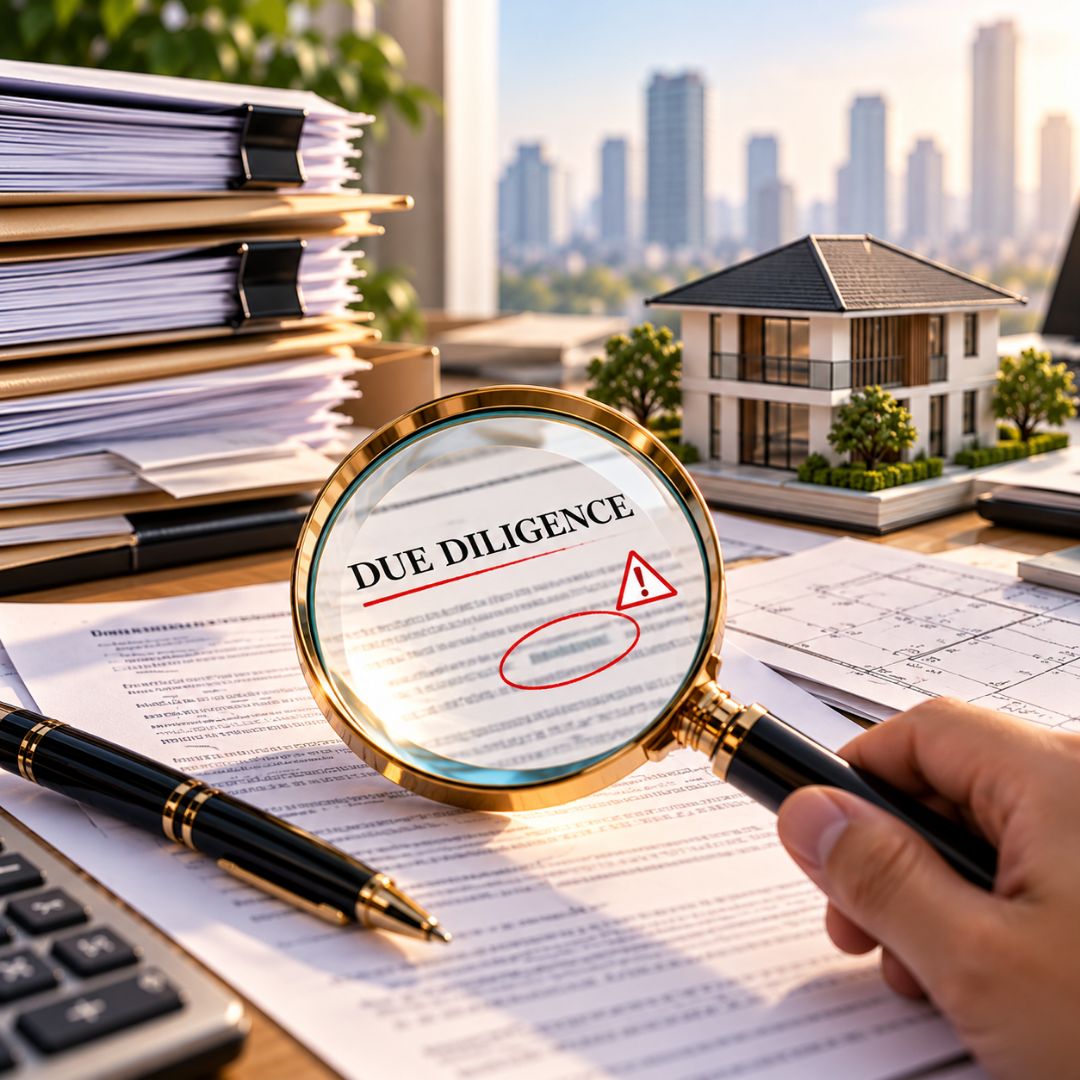
Property fraud, overlapping titles, and undisclosed liabilities are real risks in the Philippine real estate market. Due diligence is the legal and ethical duty of a licensed broker to verify the authenticity, ownership, and legal status of any real property before marketing or transacting it.
Why Due Diligence Matters
- Protects the client from fraud, double sales, and forged documents
- Confirms clean ownership and compliance with government regulations
- Uncovers liens, adverse claims, unpaid taxes, and disputes before they become your problem
- Protects the broker’s license from violations of R.A. 9646 (Real Estate Service Act) and the PRBRES Code of Ethics
- Ensures the transaction is valid, binding, and enforceable
Our Due Diligence Checklist
1. Title Verification
Confirm the authenticity and ownership of the TCT/CCT/OCT. Review the registered owner, technical description, encumbrances, and annotations.
Authority: Registry of Deeds (LRA e-Title System)
2. Tax Validation
Secure the Tax Declaration and official receipts. Check for delinquent real property tax or special levies.
Authority: City/Municipal Assessor and Treasurer
3. Property Identification
Match the technical description with the survey plan and on-site boundaries. Check for encroachments, access issues, and occupants.
Authority: DENR-LMB / Licensed Geodetic Engineer
4. Land Classification and Zoning
Confirm the land is alienable and disposable. Check zoning and permitted use, and DAR clearance for agricultural land.
Authority: DENR, Local Zoning Office, DAR
5. Regulatory Compliance
Confirm the developer’s registration, License to Sell, and project approvals. For condominiums, review the Master Deed and association dues.
Authority: DHSUD Regional Office
6. Encumbrance Check
Verify there are no undisclosed mortgages, lis pendens, adverse claims, or court attachments.
Authority: Registry of Deeds
7. Seller’s Authority and Civil Status
Verify identity and capacity to sell, including spousal consent, heirs’ consent and estate tax clearance for inherited property, a valid SPA for agents, and a board resolution for corporate sellers.
Authority: Broker / Legal Counsel
8. Permits and Occupancy
Verify the Building Permit and Certificate of Occupancy for existing structures.
Authority: Local Building Official
9. Tax Clearances for Sale
Ensure Capital Gains Tax (or applicable withholding tax) and Documentary Stamp Tax are paid. Secure the BIR Certificate Authorizing Registration (eCAR).
Authority: BIR Revenue District Office
10. Client KYC and AMLA
Verify client identity and source of funds in accordance with R.A. 9160, as amended.
Authority: AMLC Guidelines
11. Contract Review
Ensure terms are clear, lawful, and compliant with R.A. 9646 and the Civil Code.
Authority: Broker / Legal Counsel
Common Red Flags Detected Through Due Diligence
- Duplicate or tampered titles (for example, not printed on LRA security paper)
- Unpaid real property taxes with annotated tax liens
- Mortgages or court attachments not disclosed by the seller
- Property sold by a person without an SPA or proof of authority
- Developer lacking a valid License to Sell, or with an expired registration
- Name or lot details that differ between the title, tax declaration, and seller’s ID
- Seller refusing to show the original owner’s duplicate title
- Pressure to pay a large reservation or cash before verification is complete
- Price far below market value
A Note for Foreign Buyers and Overseas Filipinos
The Constitution generally restricts private land ownership to Filipino citizens and Filipino-owned corporations. Foreigners may own condominium units, subject to the 40% foreign ownership limit of the project, and may lease land under applicable laws. Former natural-born Filipinos may acquire land within the limits set by law. We can help you understand the options available to you.
Buy with Confidence. Talk to Us First.
Contact us to schedule a consultation. A thorough due diligence review costs far less than a lost property or a long legal dispute.
Disclaimer: This content is for general information only and does not constitute legal advice. Laws, tax rates, and agency procedures change, so requirements may vary by property and transaction.egal advice. Laws, tax rates, and agency procedures change, so requirements may vary by property and transaction.